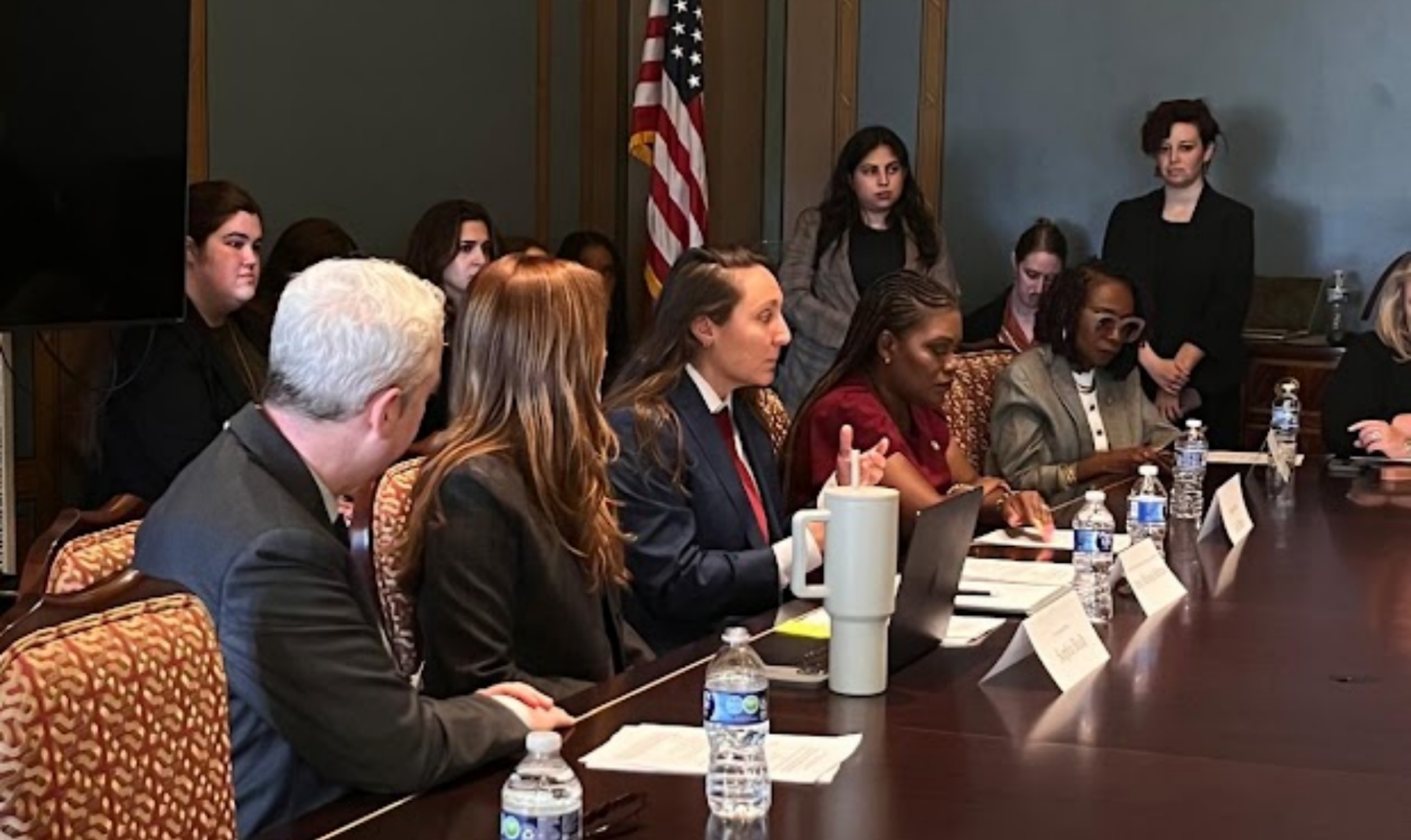
On September 27th, 2026 California Governor Gavin Newsom signed SB 337, Prisons: Sexual Assault, into law! The Sexual Violence Prevention Association (SVPA) proudly endorses this vital legislation that will increase the prevention of sexual violence in prisons across the state. At the same time, Governor Newsom vetoed another SVPA-backed bill that would have provided additional protections.
In August of 2026, the US Department of Justice (DOJ) found that the California prison system had systematically failed to protect incarcerated women from sexual abuse and harassment by staff. Investigators found that women had no confidential way to report abuse, and that staff assigned to investigate sexual misconduct were perpetrators of abuse themselves. In one instance, a guard sexually abused incarcerated women for over a decade. He was ultimately charged with 60 counts of sexual assault and sentenced to 224 years, but his rein of abuse should not have continued for so long. This is state-tolerated sexual violence.
Victims of sexual violence while incarcerated face significant barriers. They cannot leave. They often cannot report without their abuser finding out. Their abuser is rarely fired. And they often face retaliation ranging from solitary confinement to unnecessary strip/cavity searches and further sexual violence.
According to the most recent National Inmate Survey, 50% of sexual victimization against inmates is perpetrated by staff. These numbers are significantly undercounted. Many inmates are scared to report or unaware that what happened to them was sexual violence. Further, state-sanctioned sexual violence, like strip and cavity searches, are legal and thus not included in this data. California has faced numerous lawsuits regarding strip search misconduct and inadequate protocols. In 2023, the Bureau of Justice Statistics found that prison staff were fired in less than half of substantiated incidents of sexual misconduct between 2016 and 2018, and only faced legal consequences in 6% of cases.
SB 337, Prisons: Sexual Assault addresses these issues. This vital law goes into effect across California on January 1st, 2027. At that time, the California Department of Corrections and Rehabilitation (CDCR) is legally required to prevent sexual violence, increased oversight, and create safer mechanisms for victims to report. Specifically, SB 337 encompasses the following.
- Requires CDCR to adopt body-worn camera policies covering activation, deactivation during confidential interactions, and compliance audits
- Mandates an updated, standing Prison Sexual Violence Elimination policy with zero tolerance for abuse, misconduct, and harassment
- Requires supervisor approval, documentation, and written receipts before nonroutine body searches or scans
- Creates a pilot program at three institutions testing scanning technology as an alternative to unclothed body searches
- Allows incarcerated people file anonymous sexual misconduct grievances directly with the Office of the Inspector General
- Extends the grievance filing window from 60 to 120 days
“We are proud to stand alongside the brave survivors, advocates, and legislators who fought to make SB 337 a reality,” said Omny Miranda Martone, Founder and CEO of the SVPA. “Incarcerated people should not have to choose between reporting sexual violence and protecting themselves from retaliation. This is a monumental law that creates systems of accountability and prevention by limiting strip searches and increasing protections. We hope to continue this momentum in other states.”
California has made massive strides preventing sexual violence in prisons, but there is still more work to do. Governor Newsom vetoed AB 464, Sexual Assault and Retaliation in Prisons Act. This bill would have required protective monitoring for incarcerated people who reported abuse. It also would have banned CDCR from hiring perpetrators of sexual misconduct and extended the statute of limitations for survivors to file civil lawsuits to the length of their incarceration plus four years after release.
Governor Newsom stated he vetoed the bill over concerns that extending the statute of limitations in this way would put the state at risk. Specifically, the statute of limitations would vary from person to person and in many cases the victim could choose to file a lawsuit decades after the incident occurred. This could be long after the evidence for their case had been destroyed, leaving the state liable without evidence for defense.
We urge the California legislature to reintroduce AB 464 next year with changes to reflect the Governor’s concerns. We plan to advocate for additional provisions mandating all evidence related to sexual violence against incarcerated people must be stored for the length of the inmates stay plus four years after their release, with extensions for ongoing cases. Additionally, we recommend including appropriations to cover the costs of storing evidence for this extended time period.
The SVPA will continue working with survivors, advocates, and legislators to advance policies that prevent strip searches and state sexual violence. Our advocacy in California follows our work passing legislation in Colorado and Idaho, as well as our work urging reform in Utah, Mississippi, and Connecticut.
“Although we are disappointed AB 464 did not pass, we cannot let this overshadow the monumental success of SB 337!” Martone said. “There is no silver bullet that will single-handedly prevent sexual misconduct. SB 337 is comprehensive legislation. It is a multifaceted approach that will systemically prevent sexual violence in prisons across the state of California.”
UPDATE 9/4/2026
Both SB 337, Prisons: Sexual Assault, and AB 464, Sexual Assault and Retaliation in Prisons Act have passed the California legislature! Now, Governor Gavin Newsom has until September 30th to sign or veto it. We are strongly urging him to sign these vital bills into law!